



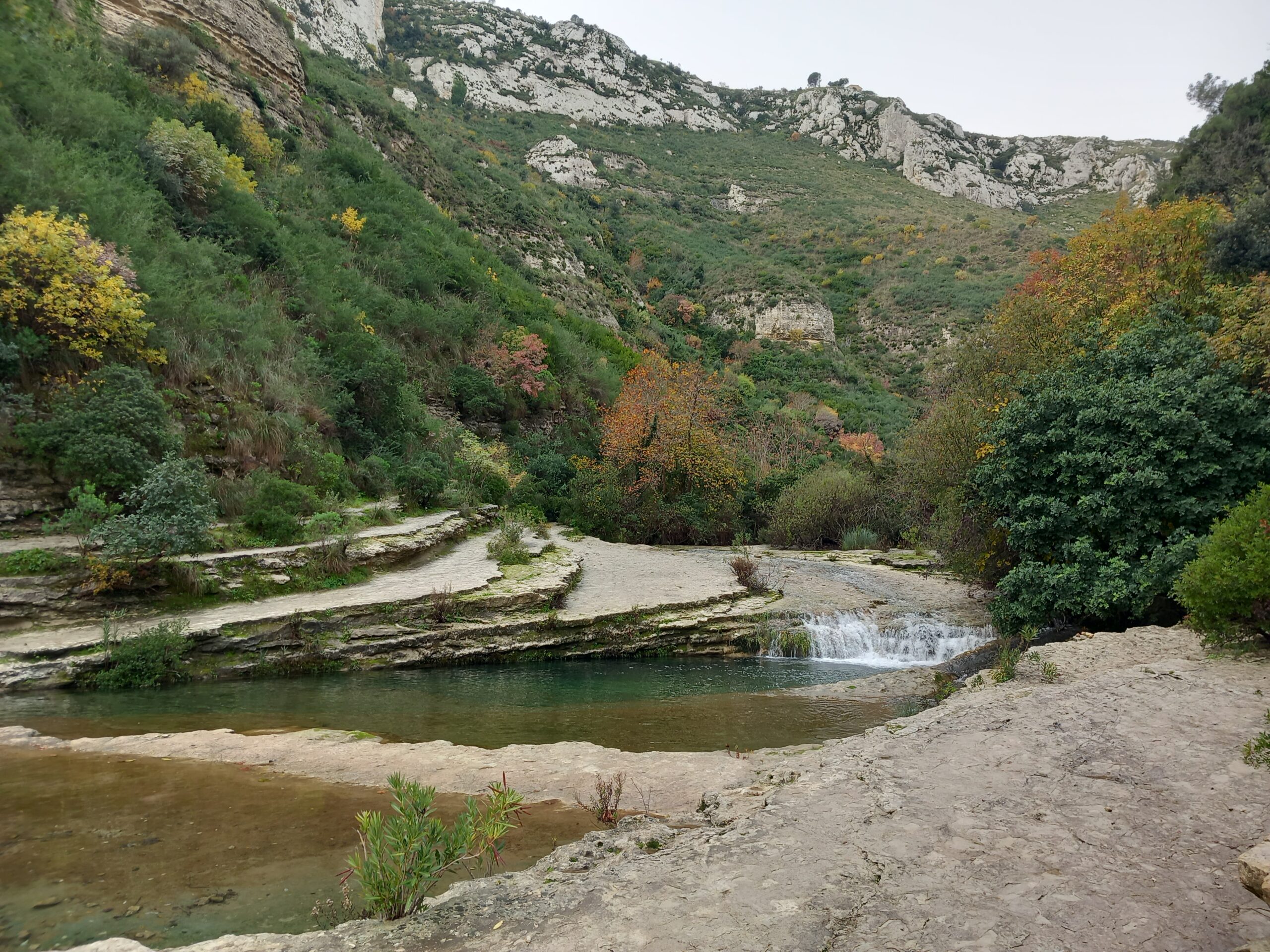
We are in eastern Sicily, between Syracuse and Avola, immersed in the unspoiled beauty of the Cavagrande del Cassibile Oriented Nature Reserve, established in 1990 with the aim of preserving a unique habitat. This area of more than 2,700 hectares is a true wonder, created by the karst nature of the Iblei Mountains overlooking eastern Sicily, between the province of Ragusa and Syracuse.
The Cassibile River, in a course of about 10 kilometers, has carved an authentic canyon, with high walls and fractures in the rock called “quarries.” At the bottom of these walls are the small waterfalls and ponds that Sicilians affectionately call the “little lakes of Avola.” Reaching out to them and soaking in their coolness and tranquility is an irresistible invitation. There are numerous paths and staircases leading to this corner of paradise, but the best known, oldest and most impressive is the Scala Cruci, as it is called by the Sicilians.
Cavagrande del Cassibile origins and characteristics
Cavagrande del Cassibile was inhabited in Paleolithic times, as evidenced by the remains of two rock villages. One of these is located on the northern slope, visible from the lookout, known as Grotta dei Briganti, with about twenty man-made rooms accessible by steps carved entirely into the rock, referred to as Ddieri.
The Cava Grande del Cassibile, called “one of the wonders of Sicily” by French traveler Jean-Pierre Houël in the 18th century, stretches between Noto, Avola and Cassibile, in the eastern regions of the Iblei Mountains. This canyon is famous for its many small lakes, called “uruvi,” which are actual potholes carved by the waters of the Cassibile River. During the summer, they are a big attraction for those who want to take a refreshing swim.
However, within the protected area of Cava Grande del Cassibile, along its ten-kilometer route, there are many other surprises for those who decide to explore it carefully. Human presence in this area dates back to prehistoric times, as evidenced by the Cassibile necropolis in Contrada Cugno Mola, explored by Paolo Orsi.
Ddiers, mills and limestone rocks.
Another evidence of ancient history are the cave dwellings of the Cansiria Cave, visible in front of the Cava Grande lookout, and the “ddieri, “ a system of tunnels-dwellings carved into the rock along inaccessible walls. However, the precise origins of these “ddieri” remain to be discovered, pending future and long-awaited archaeological studies.
In the areas surrounding the Reserve, both upstream and downstream, mills can be identified that took advantage of the constant presence of water from the Hyblean rivers. Even during the summer, these rivers never dry up thanks to the many springs that slowly release rainwater filtered through the limestone rock. The surrounding vegetation, with its changing colors, gives an ever-changing face to the landscape. During the months of December to May, it is possible to admire the flowering of more than thirty different species of orchids.
Pathways trails uruvu tunnu carrubella
Among the proposed routes to explore the Cava Grande del Cassibile, an interesting one is that of Contrada Carrubella, which has remained untouched by fires. This route also offers the opportunity to visit a less crowded but very picturesque pond called “Uruvu tunnu”
The other village, almost opposite, consists of a complex system of caves arranged next to each other, connected by tunnels and galleries. These are burial hypogea reused as dwellings during the Byzantine era.
Cavagrande Reserve archaeology fires
Visiting the Cavagrande del Cassibile Oriented Nature Reserve, in the municipalities of Avola, Noto and Siracusa, in the province of Syracuse, means embarking on a journey through history, nature and peace. This area is an oasis out of time, which should be preserved for its naturalistic, scenic, archaeological and anthropological riches. The Azienda Foreste Demaniali of the Sicilian Region is responsible for its preservation, and the area will hopefully be included in the Iblei National Park soon.
Despite the wonder and protection of this reserve, it unfortunately has several critical issues. The very nature of the rock makes it prone to small landslides during heavy rains, but human intervention has contributed to its fragility, as evidenced by periodic fires, including the nefarious one of June 25, 2014, which destroyed much of the vegetation. Since then, the reserve has been officially closed from some of its accesses, such as the “Scala Cruci” trail because the paths have not yet been secured.
Guided excursion flora and fauna Cavagrande ponds
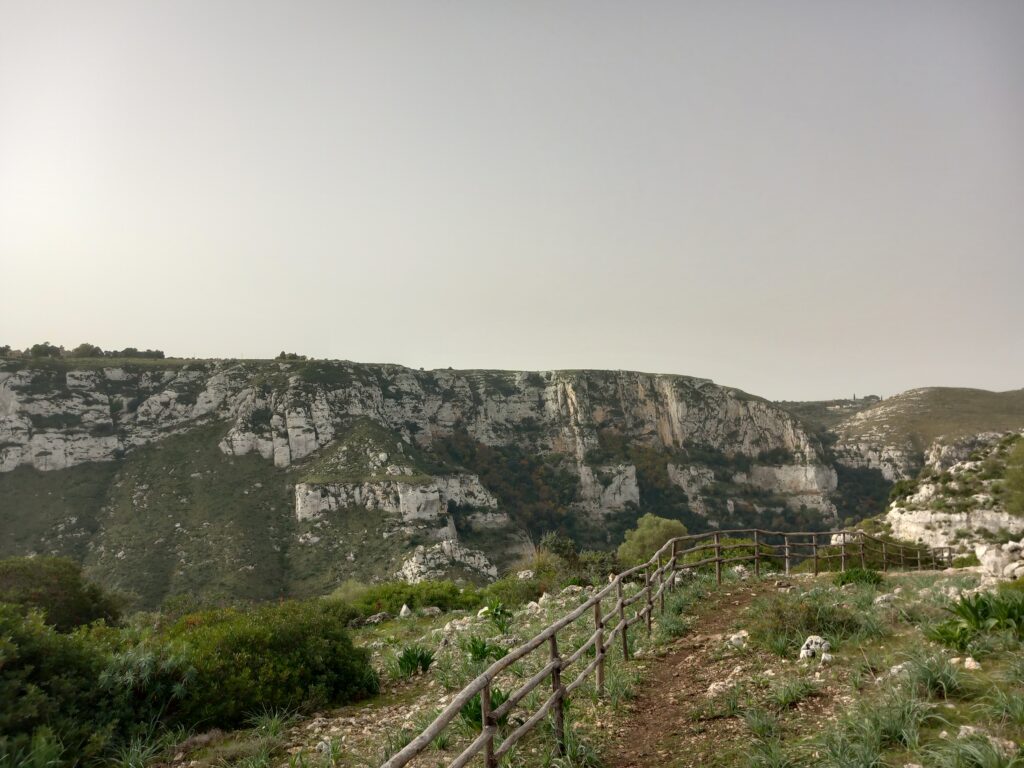 To fully explore the paths of Cavagrande del Cassibile and enjoy the extraordinary nature of the Reserve we will lead you together with our guides through the most hidden ravines of Cavagrande, among waterfalls, ponds and countless naturalistic surprises such as river crabs, various species of amphibians and many other inhabitants of the Reserve easily spotted during our trekking